China’s Advanced Manufacturing Accelerates Industrial Upgrade in the 15th Five-Year Plan
BEIJING, September 17, 2026 — Chinese manufacturing has continued to make headlines this year, highlighting the rapid innovation, technological upgrading and industrial transformation taking place across the country.
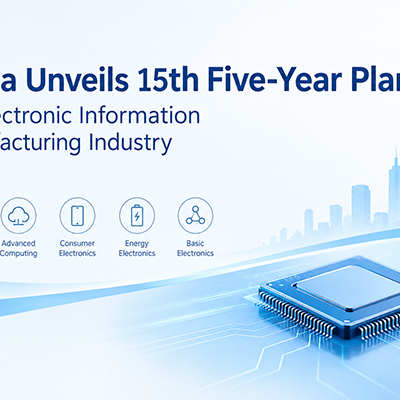
As China enters the first year of its 15th Five-Year Plan, a modern industrial system centered on advanced manufacturing is being built at an accelerated pace, strengthening the foundations of the real economy and creating new momentum for high-quality growth.
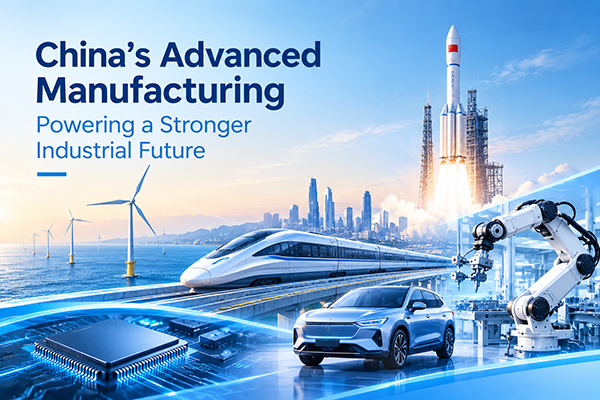
From rockets and spacecraft to high-speed trains and offshore wind power, a series of technological achievements has demonstrated the expanding capabilities of China’s advanced manufacturing sector.
From Higher to Faster and Farther
China’s manufacturing achievements this year have spanned a wide range of strategic industries.
The Long March-10B carrier rocket has achieved the world’s first recovery of a launch vehicle using a net-based recovery system, marking a new development in reusable launch technology.
The Mengzhou spacecraft has successfully completed a maximum dynamic-pressure abort test, representing another important step toward China’s planned crewed lunar exploration program.
In transportation, the CR450 high-speed train has successfully completed full-train testing. With a target operating speed significantly higher than existing high-speed rail services, the train is moving toward commercial passenger operations.
China is also extending its offshore wind capabilities farther into the open sea. Large wind turbines have been installed more than 130 kilometers offshore, demonstrating the expansion of China’s deep-sea offshore wind development.
Advanced Manufacturing Moves Up the Global Value Chain
China’s manufacturing sector is increasingly shifting from scale-driven growth toward technology- and innovation-driven development.
Today, approximately six out of every 10 new-energy vehicles sold worldwide are produced in China, according to the figures cited in the report. China also accounts for approximately 97% of global humanoid robot shipments.
These figures reflect the rapid expansion of China’s capabilities in new-energy vehicles, robotics, intelligent manufacturing and other emerging industries.
Advanced manufacturing is therefore becoming not only a pillar of China’s industrial economy, but also an increasingly important component of global industrial supply chains.
China’s leader has emphasized the importance of the real economy and manufacturing, particularly advanced manufacturing, in building a modern industrial system.
The country has also emphasized technological innovation as a driver for upgrading traditional industries, expanding emerging industries and developing future industries, while promoting the intelligent, green and integrated development of manufacturing.
Innovation at the Core of Advanced Manufacturing
Innovation remains at the center of China’s advanced manufacturing strategy.
This year, the quota for relending specifically supporting technological innovation and equipment upgrades was increased from 800 billion yuan to 1.2 trillion yuan, providing additional financial support for enterprises undertaking intelligent and green transformation.
China has also expanded insurance support for major first-of-a-kind technical equipment, with the maximum government premium subsidy reaching 80%.
At the same time, manufacturing talent-support programs are being strengthened to encourage the development and commercialization of new technologies.
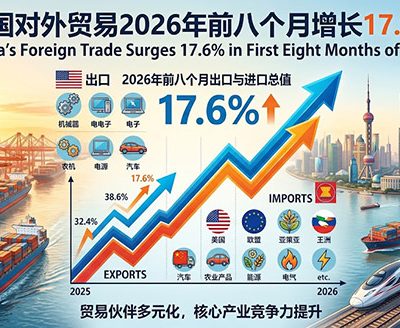
The rapid development of industrial technology is reflected in the expansion of high-end manufacturing. According to the figures provided, the value added of China’s high-tech manufacturing industry increased 14.2% year on year during the first eight months of 2026.
The number of so-called lighthouse factories is another indicator of this transformation. China is home to approximately six out of every 10 newly added lighthouse factories worldwide, highlighting the country’s growing adoption of advanced automation, artificial intelligence and digital manufacturing technologies.
Industrial Clusters Strengthen Supply Chains
The development of advanced manufacturing is also being supported by increasingly integrated industrial clusters.
The construction of large-scale industrial ecosystems allows companies specializing in different components, materials and technologies to work together within highly coordinated supply chains.
China’s LNG shipbuilding industry provides one example.
As of early July, Chinese LNG carrier orders reportedly accounted for approximately 30% of the global total. The construction of large LNG carriers involves suppliers from multiple regions: decks can come from Jiangsu, cargo-tank insulation panels from Zhejiang, while final assembly and system integration take place in Shanghai.
The development of domestically produced cryogenic valves has also involved more than 60 organizations, with more than 1,000 key valves achieving domestic production for the first time.
Such examples demonstrate how advanced manufacturing clusters can combine the capabilities of multiple companies and regions to develop complex products.
Regional Manufacturing Clusters Gain Momentum
China is further strengthening cooperation among regional manufacturing clusters.
Following the establishment of the Yangtze River Delta Advanced Manufacturing Cluster Alliance last year, 26 national-level clusters have been brought into a broader framework for cooperation.
The scale of these industrial ecosystems can significantly shorten supply chains. For example, components required to manufacture a new-energy vehicle can reportedly be assembled from suppliers within approximately a four-hour drive.
In the large-aircraft sector, an industrial cluster has established a supplier database containing more than 1,800 companies, helping expand domestic participation in the aircraft manufacturing supply chain.
Across the country, 80 national-level advanced manufacturing clusters are developing according to their respective regional strengths while increasing coordination and cooperation.
The goal is to transform these clusters into internationally competitive manufacturing centers.
Connecting Technological Innovation with Industrial Innovation
China’s manufacturing sector currently contributes more than 30% of global manufacturing growth, according to the figures provided in the report.
During the 15th Five-Year Plan period, China plans to further address bottlenecks between technological innovation and industrial innovation, helping research achievements move more efficiently from laboratories into commercial applications.
At the same time, the country plans to deepen the integration of advanced manufacturing with modern services.
This means moving beyond manufacturing products alone toward higher-value activities such as research and development, industrial design, branding, technical services and integrated solutions.
The shift is expected to create additional value across the manufacturing chain while strengthening the competitiveness of Chinese companies in international markets.
Building a Stronger Industrial Foundation
The rapid development of advanced manufacturing comes as global industrial and supply chains undergo significant restructuring and artificial intelligence accelerates a new wave of technological change.
For China, the development of advanced manufacturing represents both an industrial upgrade and an effort to strengthen the foundations of the real economy.
From reusable rockets and high-speed trains to offshore wind power, new-energy vehicles, humanoid robots, LNG carriers and intelligent manufacturing systems, China’s manufacturing sector is expanding into increasingly technology-intensive fields.
As the country moves deeper into the 15th Five-Year Plan period, the continued integration of technology, manufacturing, industrial clusters and modern services is expected to play an important role in China’s efforts to build a more advanced and resilient modern industrial system.