How U.S. Fuel-Economy Policy Changes Create Opportunities for China’s EV Supply Chain
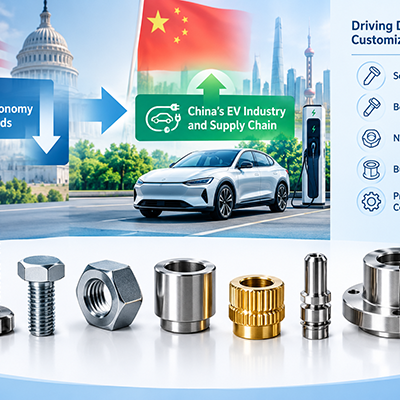
Recent changes in U.S. vehicle fuel-economy policy highlight an important reality facing the global automotive industry: the transition toward electric mobility is not developing at the same pace in every major market.
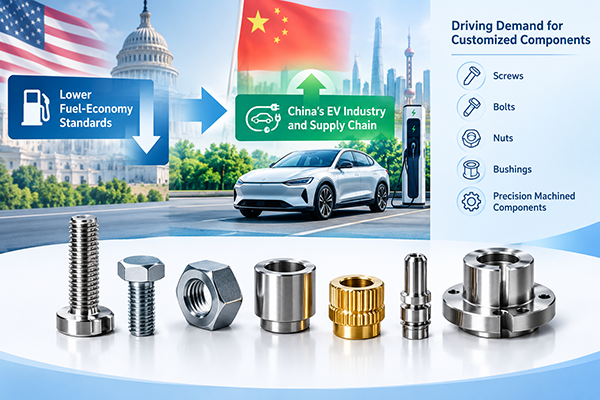
According to Reuters, the U.S. administration is moving to significantly lower vehicle fuel-economy requirements through 2031. The proposed standard would reduce the fleetwide average requirement to approximately 34.5 miles per gallon by 2031, compared with 50.4 miles per gallon under the previous Biden-era standard. The U.S. Department of Transportation estimated that the lower requirements could reduce the average cost of new vehicles, while also increasing fuel consumption and carbon dioxide emissions over the longer term.
The Positive Impact on China’s EV Supply Chain
The significant reduction in U.S. vehicle fuel-economy standards could create new opportunities for China’s electric vehicle industry and its upstream supply chain.
As policy priorities differ across major markets, China’s EV industry can continue strengthening its advantages in batteries, electric motors, intelligent vehicle systems and precision manufacturing.
This growth also benefits upstream suppliers, including custom fastener manufacturers. Increasing demand for EVs, batteries and advanced equipment is driving demand for customized bolts, customized nuts, screws,bushings and precision-machined components.
For China’s custom fastener industry, the continued development of the EV sector provides opportunities to move toward higher precision, greater customization and deeper integration into global supply chains.
China’s EV Industry Is More Than an Automobile Industry
China has developed one of the world’s most comprehensive electric vehicle manufacturing ecosystems.
The International Energy Agency estimates that nearly 22 million electric cars were produced globally in 2025. China accounted for nearly 75% of global electric-car production, making it the world’s largest hub for electric vehicle manufacturing and trade. Chinese electric vehicle exports also exceeded 2.5 million units in 2025.
This scale creates an important industrial advantage: innovation can move rapidly from engineering design to mass production.
Electric vehicles require sophisticated integration of:
- Battery systems
- Electric motors
- Power electronics
- Thermal-management systems
- Electronic control units
- Charging systems
- Intelligent driving hardware
- Lightweight structural components
- Precision-machined components
- Customized metal parts and fasteners
As these systems become more sophisticated, manufacturers increasingly require components that are designed around specific applications rather than standardized catalogue parts.
This creates a growing market for customized manufacturing.
A Strong EV Industry Supports a Broad Manufacturing Ecosystem
The development of China’s EV industry has also strengthened upstream manufacturing capabilities.
The battery industry provides a clear example. According to the IEA, China accounted for more than 80% of global battery-cell manufacturing capacity in 2025. Chinese manufacturers also accounted for approximately 85% of global cathode active-material production and more than 90% of anode active-material production.
This industrial concentration does not simply benefit battery manufacturers. It creates demand throughout the supply chain.
Battery equipment manufacturers need precision components.
Motor manufacturers need shafts, bushings, positioning components and specialized fasteners.
Charging equipment manufacturers require customized metal components.
Automotive electronics require miniature precision parts.
New-energy vehicle factories require assembly hardware capable of meeting increasingly specific dimensional, strength, corrosion-resistance and reliability requirements.
Consequently, the EV industry can stimulate demand across a wide range of specialized manufacturing sectors.
Why Customized Fasteners Matter
Fasteners may appear to be relatively small components compared with batteries, motors or vehicle control systems. However, their role in modern EV manufacturing is increasingly important.
Electric vehicles contain numerous assemblies where standard fasteners may not fully satisfy the requirements of the application.
For example, manufacturers may require:
- Non-standard screws and bolts
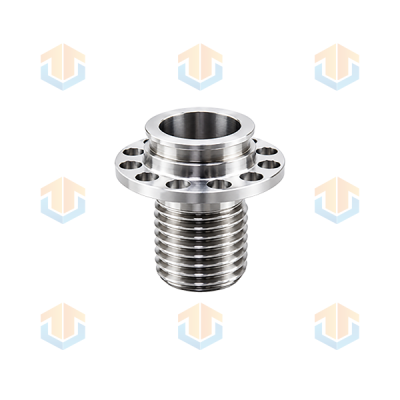
- Customized nuts and threaded bushings
- Double-threaded components
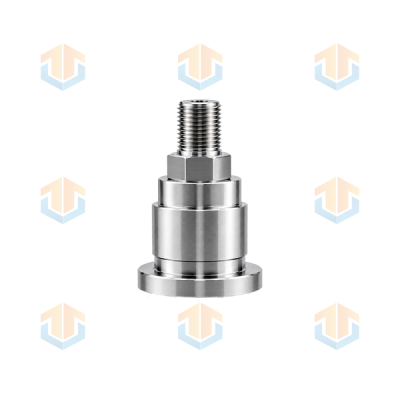
- Flanged and stepped fasteners
- Precision positioning pins
- Eccentric bolts
- Anti-theft fasteners
- Lightweight aluminum fasteners
- Stainless-steel precision fasteners
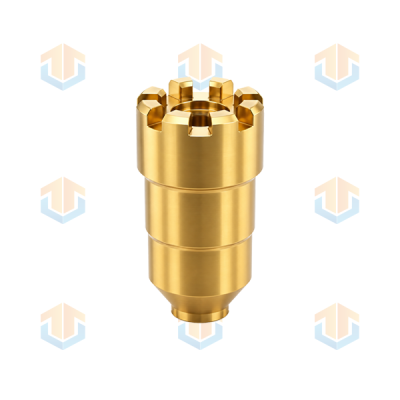
- Copper and brass threaded components
- Components with internal and external threads
- CNC-machined special-shaped fasteners
These components may need to combine several functions, such as fastening, positioning, adjustment, sealing, insulation or mechanical alignment.
This is where China’s large manufacturing ecosystem becomes particularly valuable.
A customer can move from product design to tooling, CNC machining, cold heading, thread rolling, surface treatment, inspection and mass production within an increasingly integrated supply chain.
Customization Is Becoming More Important
The development of electric vehicles is also changing the nature of component demand.
Traditional automotive manufacturing relies heavily on standardized components produced in extremely large volumes. EV development, however, involves rapid product iteration, new vehicle architectures and continuous optimization of battery packs, thermal-management systems, electronic modules and intelligent hardware.
As new designs emerge, component suppliers must respond quickly.
For customized fastener manufacturers, this creates opportunities in areas such as:
Rapid prototyping → engineering samples → small-batch production → mass production → continuous design optimization
A customized fastener manufacturer is therefore not simply supplying screws or nuts. It can become part of the customer’s engineering and manufacturing process.
The ability to interpret drawings, optimize manufacturing processes, select appropriate materials, develop tooling and provide consistent quality can become an important competitive advantage.
China’s EV Industry Also Creates Opportunities Beyond China
The significance of China’s EV supply chain is increasingly global.
The IEA reports that Chinese electric-car exports more than doubled in 2025 to over 2.5 million vehicles. Chinese-made EVs also accounted for 55% of electric-car sales in markets outside Europe and the United States in 2025. Southeast Asia, the Middle East and Latin America have become increasingly important destinations for Chinese EV products.
At the same time, Chinese automakers are expanding overseas manufacturing.
This means the demand generated by China’s EV ecosystem is no longer limited to vehicles manufactured in China. As Chinese automotive companies establish production and supply networks in Southeast Asia, Europe, Latin America and other markets, Chinese component manufacturers can potentially participate in these international supply chains through exports, local partnerships and overseas production networks.
The Positive Significance for China’s Customized Fastener Industry
For the customized fastener industry, the development of electric vehicles represents more than an increase in order volume.
It encourages manufacturers to move toward:
higher precision + greater customization + faster response + better quality control + deeper engineering cooperation
EV-related applications often require suppliers to meet demanding requirements for dimensional accuracy, mechanical properties, corrosion resistance, surface treatment and production consistency.
This can accelerate technological upgrading among China’s precision-component manufacturers.
Companies that traditionally produced conventional screws and bolts can gradually expand into CNC precision machining, special-shaped components, threaded bushings, positioning parts, lightweight components and integrated fastening solutions.
In this sense, the EV industry can become an important driver for the transformation of China’s fastener industry from commodity manufacturing toward customized, engineering-oriented manufacturing.
A Broader Industrial Opportunity
The relationship between electric vehicles and customized fasteners illustrates a broader principle of modern manufacturing.
When a major industry undergoes technological transformation, the opportunities are not limited to the final products.
They extend throughout the entire industrial chain:
EVs → batteries → motors → electronic systems → production equipment → precision components → customized fasteners
Every new vehicle platform, battery system, manufacturing machine and electronic module can generate new requirements for specialized components.
For China’s manufacturing sector, this creates an opportunity to combine large-scale production capabilities with flexible customization.
For customized fastener manufacturers, the long-term opportunity is therefore not simply to supply more screws and bolts. It is to become a reliable engineering partner for the rapidly evolving industries built around electrification, intelligent manufacturing and advanced equipment.
Conclusion
Global automotive policies and market strategies may continue to differ across regions. However, the development of electric mobility has already created a substantial manufacturing ecosystem.
China’s strong position in electric vehicles, batteries and related components provides a large industrial base for upstream manufacturers. The IEA’s latest data demonstrate the scale of China’s role in global EV and battery production.
For China’s customized fastener industry, this transformation creates opportunities to move beyond standardized products and participate more deeply in high-value manufacturing.
From batteries to motors, from intelligent equipment to EV assembly lines, customized fasteners are becoming an increasingly important part of the precision-manufacturing ecosystem.
For manufacturers with strong engineering capabilities, flexible production, precision machining and strict quality control, the growth of electric mobility represents a long-term opportunity to participate in the next generation of global manufacturing.