NANNING, China, September 17, 2026 — The 23rd China-ASEAN Expo and the China-ASEAN Business and Investment Summit opened Thursday in Nanning, capital of south China’s Guangxi Zhuang Autonomous Region, with regional economic integration, trade and investment cooperation, and new growth areas high on the agenda. Chinese Vice Premier Ding Xuexiang attended the opening ceremony and delivered a speech.
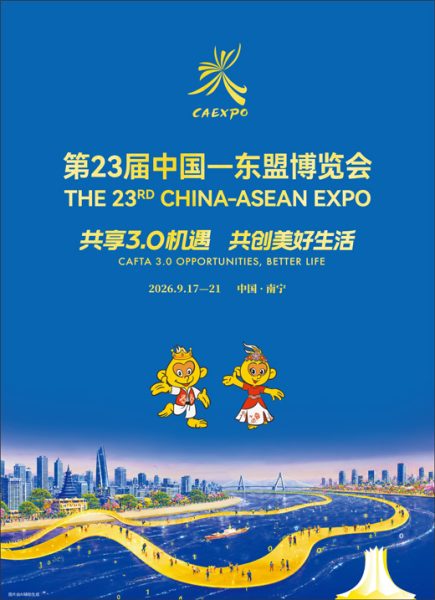
Held under the theme “CAFTA 3.0 Opportunities, Better Life,” this year’s expo focuses on new opportunities arising from the upgrading of the China-ASEAN Free Trade Area (CAFTA), with cooperation extending into areas including digital economy, green development and artificial intelligence. More than 3,400 companies from over 70 countries and regions are participating in the event.
CAFTA 3.0 to Create New Growth Opportunities
Ding said the China-ASEAN Free Trade Area is an important platform for building a closer China-ASEAN community.
He noted that China and ASEAN have made steady progress in developing the free trade area and achieved substantial results in economic and trade cooperation.
The CAFTA 3.0 Upgrade Protocol has been formally signed, and the two sides are currently completing their respective legal procedures and working to accelerate its entry into force and implementation. According to Ding, once implemented, the upgraded agreement will provide additional momentum for regional economic development.
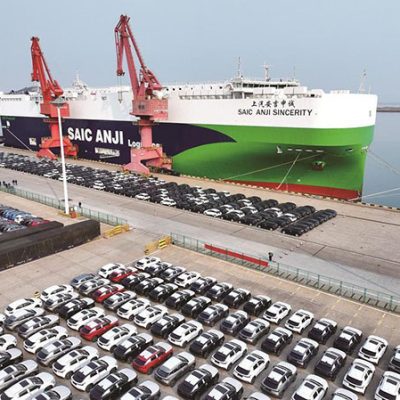
The development of CAFTA has coincided with a significant expansion in bilateral trade. China has remained ASEAN’s largest trading partner for 17 consecutive years, while ASEAN has been China’s largest trading partner for six consecutive years. In 2025, bilateral trade exceeded $1 trillion for the first time.
Four Priorities for Deeper Regional Integration
Ding outlined four areas for further developing a higher-level China-ASEAN free trade area.
First, he called for broader regional opening-up. China and ASEAN should improve cooperation frameworks and institutional arrangements, deepen cooperation on standards and technical regulations, and accelerate the development of an open, inclusive and rules-based regional market.
Second, he called for higher-quality trade and investment cooperation. China and ASEAN should expand the depth and breadth of economic cooperation and work together to maintain stable and efficient regional and global industrial and supply chains.
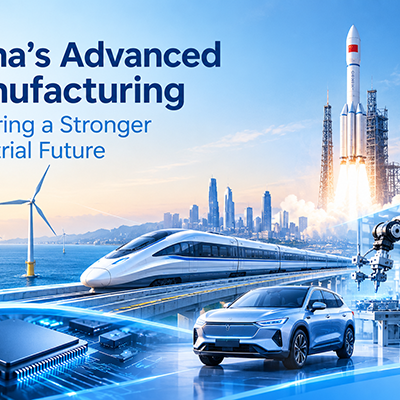
Third, he emphasized cooperation in emerging industries. The two sides should promote the development of the regional digital economy, deepen cooperation in artificial intelligence applications, and facilitate trade in environmental goods and services.
Fourth, he called for more efficient regional connectivity. China and ASEAN should coordinate the development of railways, highways, ports and airports, address bottlenecks in cross-border logistics and further develop the New International Land-Sea Trade Corridor.
Digital Economy and AI Become New Areas of Cooperation
Emerging technologies are playing an increasingly important role in China-ASEAN economic cooperation.
The CAFTA 3.0 framework expands cooperation into areas such as the digital economy and green development, creating additional opportunities for companies operating across the region.
Ding called for deeper cooperation in technology research and development and practical applications of artificial intelligence, with the aim of strengthening innovation-driven growth.
The expo itself features products and projects spanning traditional industries, digital communications, green development and AI. A dedicated AI exhibition area is showcasing more than 500 products, while new sections focus on ASEAN demand for smart transportation, logistics, urban management and industrial-park development.
Connectivity Strengthens Regional Supply Chains
Infrastructure connectivity remains an important foundation for China-ASEAN trade and investment.
Ding called for continued construction and improvement of railways, highways, ports and airports, alongside stronger institutional connectivity and more efficient cross-border logistics.
The opening of the Pinglu Canal in Guangxi one day before the expo provides a new example of this connectivity drive. The 134.2-kilometer canal links Nanning with the Beibu Gulf and is designed to strengthen multimodal transport between inland areas and the sea. It is also a key project supporting the New Western Land-Sea Corridor.
Trade and Investment Links Continue to Expand
Economic ties between China and ASEAN have continued to deepen over the past two decades.
According to official figures, bilateral trade exceeded $1 trillion in 2025, reaching $1.05 trillion. During the first seven months of 2026, bilateral trade reached $744.41 billion, up 24.7% year on year and accounting for 21.8% of China’s total foreign trade.
Investment cooperation has also expanded, with cumulative two-way investment exceeding $510 billion, according to figures cited at the summit. Industrial and supply-chain links between China and ASEAN economies have continued to deepen through major infrastructure and industrial cooperation projects.
A Broader Platform for Regional Economic Cooperation
The China-ASEAN Expo and China-ASEAN Business and Investment Summit have become platforms for companies and governments to explore trade, investment and industrial cooperation.
The 23rd edition, running from September 17 to 21 in Nanning, covers approximately 170,000 square meters and includes more than 50 trade and investment promotion activities. Timor-Leste is participating for the first time as a full ASEAN member and co-host of the expo.
With CAFTA 3.0 moving toward implementation, China and ASEAN are seeking to expand cooperation beyond traditional merchandise trade into digital technology, artificial intelligence, green development, infrastructure and cross-border supply chains.
The latest developments point to a broader and more integrated framework for China-ASEAN economic cooperation, with trade liberalization, industrial connectivity and emerging technologies becoming increasingly important components of regional economic integration.