
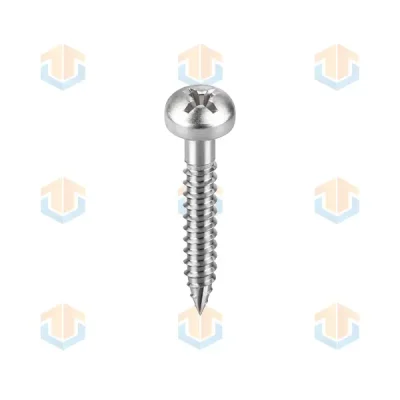
Custom Phillips Pan Head Self-Tapping Screws with Shoulder
HETAI Manufacturing specializes in the production of Custom Phillips Pan Head Self-Tapping Screws with Shoulder, designed for applications requiring secure fastening, accurate component positioning, and reliable assembly. Featuring a rounded pan head, Phillips drive, smooth shoulder section, and pointed self-tapping threaded end, these custom screws combine fastening functionality with controlled spacing and positioning.
HETAI manufactures non-standard screws according to customer drawings, samples, and technical specifications, offering customized dimensions, materials, surface treatments, and thread configurations for a wide range of industrial applications.
1. What Is It?
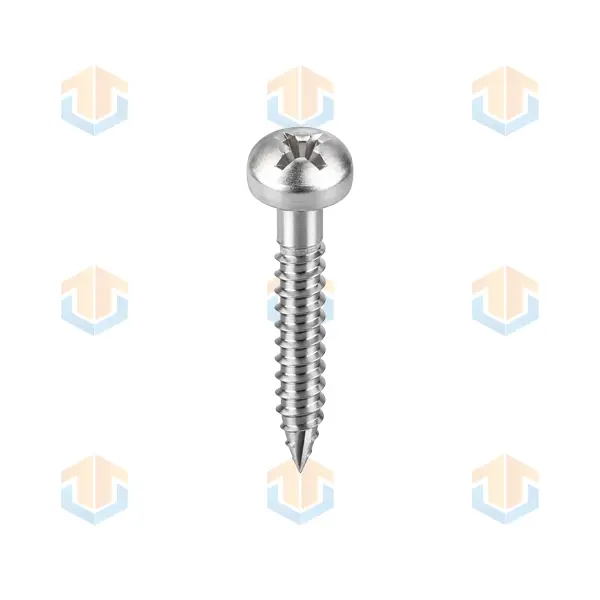
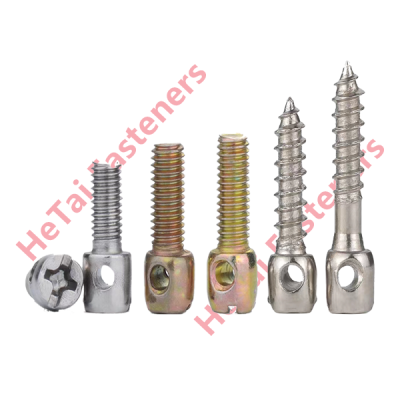
A Phillips Pan Head Self-Tapping Screw with Shoulder is a specialized fastener that combines four main structural features:
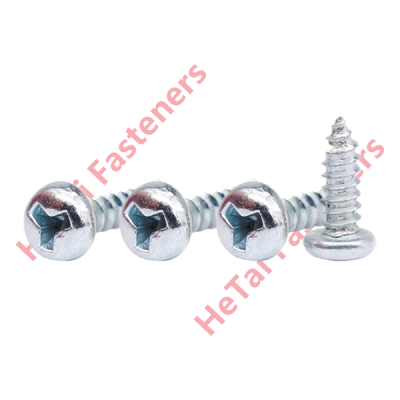
- Phillips Pan Head: A rounded head with a cross-shaped drive recess for installation using a Phillips screwdriver or compatible power tool.
- Smooth Shoulder: An unthreaded cylindrical section beneath the head that provides a defined spacing or locating surface.
- Self-Tapping Thread: A specially formed external thread designed to create or form mating threads in suitable materials during installation.
- Pointed Tip: A tapered end that helps the screw enter the workpiece and engage the material.
The shoulder length, thread length, head diameter, and overall dimensions can be customized to meet specific assembly requirements.
2. What Is It Used For?
These custom screws are used to fasten components while maintaining a defined distance, clearance, or position between assembled parts.
The smooth shoulder can serve as a locating surface or spacer, while the threaded section provides fastening engagement. This combination can reduce the need for separate spacers or additional locating components in suitable designs.
Typical functions include:
- Securing components to plastic housings or panels
- Maintaining a defined gap between assembled parts
- Positioning brackets and mounting components
- Fastening thin sheet-metal components
- Connecting plastic and metal components
- Providing repeatable positioning in mechanical assemblies
The appropriate design depends on the materials being joined, the required clamping force, and the intended function of the shoulder.
3. How Does It Work?
The screw is installed by applying rotational torque through its Phillips drive recess.
During installation, the pointed tip enters the workpiece, and the self-tapping thread forms or cuts a mating thread in the receiving material, depending on the screw design and material properties.
The threaded section generates the fastening force that holds the components together. The smooth shoulder remains unthreaded and can provide a defined bearing, locating, or spacing surface.
For reliable performance, the shoulder diameter and length, thread geometry, pilot-hole size, and installation torque must be matched to the application.
When fastening plastic components, appropriate torque control is particularly important to avoid stripping the formed thread or damaging the workpiece.
4. What Materials Are Available?
HETAI can manufacture custom shoulder self-tapping screws from various metals according to strength, corrosion resistance, cost, and application requirements.
Common material options include:
- Carbon Steel: Suitable for general-purpose fastening applications.
- Alloy Steel: Available for applications requiring specific mechanical properties.
- Stainless Steel 304: Provides good corrosion resistance for general industrial use.
- Stainless Steel 316: Suitable for more demanding corrosive environments.
- Stainless Steel 410: Can provide increased hardness and strength when appropriately processed.
- Brass: Offers corrosion resistance, electrical conductivity, and an attractive appearance.
- Aluminum: Suitable for lightweight applications where the design and load requirements permit.
Material selection depends on the receiving material, thread-forming requirements, service environment, and required mechanical performance.
5. What Is the Size Range?
As a custom fastener manufacturer, HETAI can produce screws according to customer drawings rather than limiting production to a single standard size range.
Typical dimensions for evaluation include:
- Thread diameter: Approximately 2–8 mm
- Overall length: Approximately 5–100 mm
- Shoulder diameter: Customized to the assembly
- Shoulder length: Customized
- Head diameter: Customized
- Head height: Customized
- Thread length: Customized
- Point geometry: Customized according to the receiving material
These ranges are indicative rather than guaranteed production limits. Larger or smaller designs can be evaluated according to the required geometry, material, and manufacturing process.
6. What Surface Treatments Are Available?
Surface treatment can improve corrosion resistance, wear resistance, appearance, or compatibility with the operating environment.
Available options include:
- Zinc Plating: Provides corrosion protection for suitable steel fasteners.
- Nickel Plating: Offers a decorative finish and additional surface protection.
- Chrome Plating: Provides a bright finish and, depending on the coating system, improved surface durability.
- Black Oxide: Creates a black appearance and provides limited corrosion protection unless supplemented with an appropriate oil or sealer.
- Passivation: Improves the corrosion resistance of suitable stainless steel surfaces.
- Electrophoretic Coating: Provides a uniform protective coating.
- Dacromet or Other Zinc-Based Coatings: Available for selected applications requiring enhanced corrosion protection.
- Custom Finishes: Other treatments can be evaluated according to customer specifications.
The treatment must be compatible with the base material, thread fit, dimensional tolerances, and service conditions.
7. What’s the Main Process for Manufacturing It?
The manufacturing process depends on the screw dimensions, material, production volume, shoulder geometry, and thread specifications.
A typical HETAI manufacturing workflow includes:
Drawing Review → Material Preparation → Head Forming or CNC Turning → Shoulder Machining → Thread Forming or Cutting → Point Forming → Deburring → Surface Treatment → Dimensional Inspection → Final Quality Inspection → Packaging
Depending on the design and production quantity, the head and shoulder may be formed through cold heading or produced using CNC turning and secondary machining.
Self-tapping threads can be manufactured using suitable thread-forming or thread-cutting processes. The selected method depends on the material, required thread geometry, and intended application.
Critical dimensions—including shoulder diameter, shoulder length, thread dimensions, head geometry, and overall length—are inspected according to the approved drawing.
8. What Are the Primary Applications?
Custom Phillips Pan Head Self-Tapping Screws with Shoulder are suitable for various industries and mechanical assemblies, including:
- Electrical and Electronic Equipment: Fastening internal components, brackets, and plastic enclosures.
- Household Appliances: Securing panels, covers, and internal mounting components.
- Automotive Components: Mounting selected interior, electrical, and plastic components.
- Plastic Products: Connecting molded parts and maintaining defined spacing.
- Lighting Equipment: Securing housings, brackets, and internal assemblies.
- Industrial Machinery: Positioning and fastening selected mechanical components.
- Furniture and Hardware: Joining components that require a defined shoulder or clearance.
- Automation Equipment: Mounting sensors, brackets, and specialized components.
The screw design should be selected according to the receiving material, loading conditions, installation frequency, and required service life.
9. What Is the Minimum Order Quantity (MOQ)?
The MOQ for custom Phillips Pan Head Self-Tapping Screws with Shoulder depends on the material, dimensions, manufacturing process, tooling requirements, and order quantity.
Prototype and small-batch orders can be discussed, subject to production feasibility and setup costs.
For larger orders, HETAI can evaluate tooling, process optimization, and production scheduling to provide competitive unit pricing.
To obtain an accurate quotation, customers should provide a technical drawing or sample, required material, surface treatment, estimated order quantity, and any special inspection requirements.
10. What Is the Shortest Production Lead Time?
For relatively simple designs using readily available materials and established manufacturing processes, sample production may typically take approximately 7–10 working days after drawing confirmation and order approval.
Actual lead times depend on:
- Product complexity
- Material availability
- Tooling requirements
- Surface treatment
- Order quantity
- Inspection and approval requirements
Mass-production lead times are confirmed after technical review and order evaluation. Expedited production may be considered for urgent projects, depending on current capacity and material availability.
Custom Phillips Pan Head Self-Tapping Screws with Shoulder from HETAI
HETAI Manufacturing specializes in custom non-standard screws, bolts, nuts, bushings, pins, and precision-machined metal components.
With capabilities in CNC turning, automatic machining, thread processing, drilling, milling, and secondary operations, HETAI supports the development and production of fasteners tailored to customer requirements.
From drawing review and sample development to manufacturing, surface treatment, quality inspection, and shipment, HETAI provides a complete custom fastener manufacturing solution.
Send your drawing or physical sample to HETAI for a customized quotation and manufacturing evaluation.
HETAI Manufacturing — Custom Fasteners Made to Your Specifications.




Comments (0)